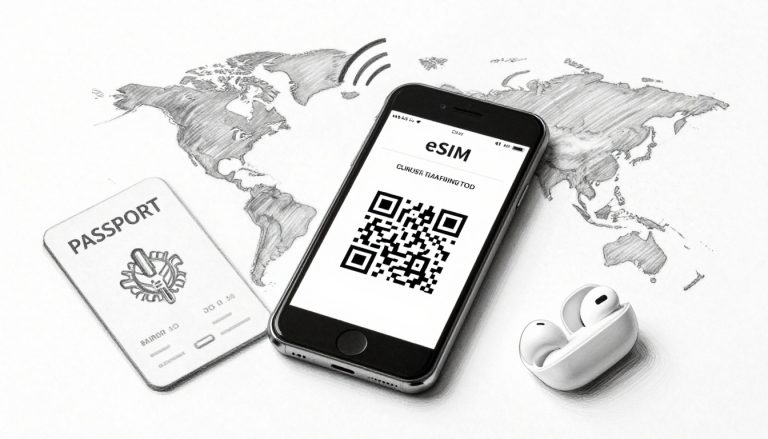
Imagine you are deep in the woods or wandering through a bustling city in a foreign land. You go to swap your tiny SIM card, but it slips through your fingers and vanishes into the grass or a storm drain. It is a total nightmare.
You can breathe a sigh of relief because the iPhone 14 does support eSIM, which means those pesky plastic bits are a thing of the past. In a bold move, Apple removed the physical SIM tray entirely for all models sold in the United States. You won’t find a single slot or hole for a card on those U.S. versions, meaning users must rely completely on iPhone eSIM compatibility for network access.
Because your phone uses digital profiles, you can easily check iPhone eSIM compatibility to see how your specific model handles multiple lines. In fact, evaluating your device’s iPhone eSIM compatibility ensures you can download local data profiles seamlessly before your trip. If you want to jump right in, you can even get your free esim now to start testing the tech based on your certified iPhone eSIM compatibility status.
Whether you are a solo camper or a frequent flyer, knowing the ins and outs of this feature is vital. Let’s look at how this shift to digital SIMs affects how you connect and travel, and how verifying iPhone eSIM compatibility can save your international journey.
The Technical Specs: Apple’s First Pure Digital Generation
Apple shook up the industry with the iPhone 14 lineup. The tech giant leaned fully into a digital-first world. This device marks a major milestone. For the first time, a flagship phone ditched a decades-old physical standard for an invisible solution.
This change does more than eliminate a tiny piece of plastic. It makes your phone more secure and flexible. Thieves cannot physically remove an embedded profile if they steal your device. Therefore, the connection stays permanently tied to the internal hardware.

The internal tech allows for a feature called Dual eSIM Standby. This means you can keep two digital lines active at the very same time without ever touching a SIM tool. You might have one line for your primary home number and another for a travel data plan. To get the most out of this setup, you can get your free esim now and see how easy it is to manage multiple profiles.
The US Model: Living that Notchless Life
If you pick up a US model of the iPhone 14, you’ll notice the left side is completely smooth. Apple removed the physical SIM tray entirely for the American market. This design choice makes the phone 100% digital, relying solely on internal chips to connect to cellular networks. It’s a bold move that signals the end of fumbling with paperclips and those tiny, easy-to-lose cards.
Living a notchless life means you manage everything through your settings menu. You can store up to eight or more eSIMs on a single device, though only two stay active at once. This hardware shift also frees up a tiny bit of internal space, which helps with water resistance and overall durability. If you’re wondering how to handle this new setup, learning how to activate eSIM on iPhone is your first step toward total digital freedom.
Global Variants: The Best of Both Worlds
While the US went all-in on digital, the rest of the world wasn’t quite ready to let go. iPhone 14 models sold in the UK, Canada, and Europe still feature a physical nano-SIM tray. These global variants offer a hybrid experience that combines old-school hardware with modern software. You get the safety net of a physical slot while still being able to use digital profiles whenever you want.
Travelers often find this hybrid setup handy when visiting regions where local carriers haven’t updated their systems yet. You can slide in a local card from a small kiosk while keeping your primary line digital. Even if your phone has a tray, the internal eSIM iPhone technology is exactly the same as the US versions. It’s the perfect compromise for those who move between high-tech hubs and more traditional locations.
| Feature | US iPhone 14 Model | Global iPhone 14 Model |
|---|---|---|
| Physical SIM Tray | None | One Nano-SIM Slot |
| eSIM Support | Fully Supported | Fully Supported |
| Line Capacity | Multiple digital profiles | One physical + multiple digital |
| Active Lines | Two at once (Dual eSIM) | Two at once (Hybrid or Dual eSIM) |
The main takeaway is that every iPhone 14 is built for a digital future, regardless of where you bought it. Even with a tray, the goal remains the same: making your connectivity as simple as a few taps on a screen. Outdated plastic cards are slowly fading away, replaced by the convenience of instant, over-the-air activation.
Why the eSIM iPhone 14 Setup Beats Plastic in the Wild
Switching to a fully digital setup isn’t just a win for tech geeks who hate cables. It is a massive upgrade for anyone who spends more time on a mountain than in a cubicle. When you’re out in the elements, your gear needs to be as tough as the trails you’re conquering. Digital SIMs turn your phone into a more cohesive, survival-ready tool. By moving away from physical hardware, Apple has simplified the way you stay connected while making your device inherently more rugged.
Maximized Durability for Dirty Trails
Every hole in your phone’s frame is a secret doorway for disaster. In the past, the SIM tray was a constant point of failure for outdoor enthusiasts. Even though that tiny slot had a rubber seal, it was still a physical breach in the metal chassis. Moving to an eSIM iPhone removes that vulnerability entirely. By sealing off that side of the device, Apple has effectively turned a potential leak point into a solid wall of protection.
Water and dust are the sworn enemies of your internal circuits. Because there’s no tray to pop open, there is no chance for a stray grain of sand or a drop of rain to find its way inside during a mid-hike photo op. This increased structural integrity means that if you accidentally drop your phone in a shallow creek, the internal air pressure has a much better chance of keeping the water out. To see how this works in practice, you can get your free esim now and experience a hardware design that’s built to withstand the elements.

No Tiny Plastic Chips to Lose in the Grass
Fumbling with a SIM ejector tool is annoying at your kitchen table, but it’s a nightmare in a windy tent or on a sandy beach. We’ve all been there, holding our breath while trying to spear a microscopic hole with a paperclip. One gust of wind or a sudden sneeze, and your only connection to the outside world is gone, buried forever in the dirt. Digital profiles eliminate this high-stakes game of “don’t drop the plastic.”
When you’re living an active lifestyle, you shouldn’t have to carry extra bits of plastic that are smaller than a fingernail. Because your profiles are stored digitally, you can switch networks from the safety of your settings menu. This transition to a digital standard is particularly helpful for those frequenting remote areas where finding a replacement card is impossible.
The benefits extend beyond just convenience:
- Digital profiles can’t be snapped in half or scratched by a dirty fingernail.
- You can store several plans on your device, making it easy to swap to a local provider if your main signal drops out in the woods.
- Theft protection is built in; a thief can’t just pop out your SIM to stop you from tracking the phone.
If you are planning a trip to a rugged destination, choosing a reliable Gohub eSIM data plan will show you exactly how seamlessly this technology holds up in the wild.. You’ll spend less time stressing over fragile hardware and more time enjoying the view. Just follow a step-by-step Airalo eSIM setup before you leave the trailhead, and you’ll be set for whatever the environment throws at you.
Step-by-Step: Activating Your Travel Connection in 60 Seconds
Getting your phone ready for a trip shouldn’t feel like solving a Rubik’s cube. Since the iPhone 14 relies so heavily on digital profiles, the activation process is actually faster than finding that tiny metal SIM tool in your junk drawer. You can basically go from zero to high-speed data while you are waiting for your coffee to brew. It’s all about moving through a few screens in your settings and letting the software do the heavy lifting for you.
Activating Your New Line via QR Code
The most common way to get your new line running is by using a QR code. Most providers will email you a digital code. Alternatively, they will show one on a screen after you buy a plan.
All you have to do is open your Settings app and tap on Cellular. From there, you just hit Add eSIM. Your device camera will spring to life instantly.
Quick Camera Scanning and Installation
Point your camera directly at the provided code. Your phone will automatically download the correct network profile.
This is the perfect time to get your free activation profile now. You can try the digital magic for yourself before starting your next big trip.
Finalizing Your Travel Network Setup
The automatic download process takes only a few seconds to complete. Once finished, your device connects to the local towers immediately.
This quick setup removes the need for physical store visits. You can activate new data packages directly from your airport gate or remote campsite.

Once the download finishes, your iPhone will ask you to label your lines. This part is super important because it keeps your numbers organized. You don’t want to accidentally call your boss from your temporary vacation number. You should label your main home number as Primary and your new digital line as Travel or Data. If you’re upgrading soon, you might also want to check out an iPhone 16 eSIM activation guide to see how the newest models handle this step.
The last thing you need to do is lock down your data path. You want to make sure your phone uses the cheap travel data instead of your expensive home plan. Go into the Cellular Data menu and select your Travel line. Most importantly, turn off the switch for Allow Cellular Data Switching so your phone doesn’t sneak back to your home network. To keep your bill safe, you should also turn off data roaming for your Primary line while you are exploring. This simple checklist ensures you stay connected without a surprise bill waiting at home:
- Open Settings and tap Cellular to find your list of lines.
- Select your Primary line and toggle Data Roaming to the off position.
- Select your Travel line and ensure Data Roaming is turned on for that specific profile.
- Set your Default Voice Line to Primary if you still need to receive home texts.
- Set Cellular Data to your Travel line for all your internet needs.
Profile Storage Capacity: A Massive Digital Wallet
Think of your iPhone 14 as a high-tech briefcase for your phone numbers. Gone are the days when you were limited to just one line or forced to carry a little plastic baggie filled with tiny chips. Your device now acts as a digital vault that can hold a surprisingly large collection of cellular identities. This shift fundamentally changes how you organize your life; because you can store around eight or more profiles, your phone is effectively a global communications hub.
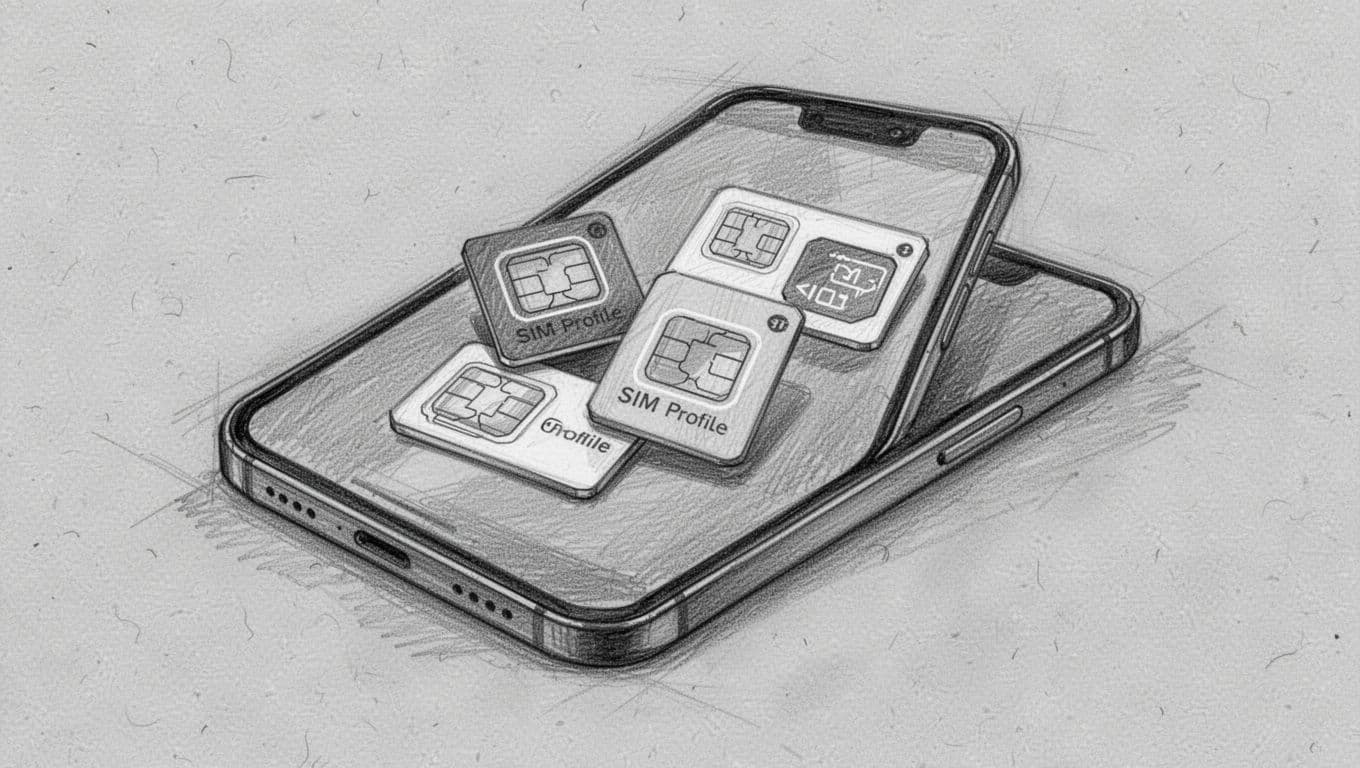
This massive capacity is a total lifesaver for people who juggle different parts of their lives. You might have a line for your primary home number, one for a side hustle, and several others dedicated to specific travel destinations. Understanding iPhone eSIM storage limits helps you realize just how much junk you can clear out of your physical wallet. You are basically carrying an entire shelf of the SIM card store right in your pocket.
Managing these profiles is remarkably easy since they all live in a clean list within your settings. You can label them whatever you want, such as “London Trip” or “Work Backup,” to keep things tidy. Even though you can store a small army of numbers, your phone lets you pick which ones are active at any given moment. This setup gives you the freedom to disappear for a weekend or stay connected across three continents without ever touching a piece of hardware.
Switching Carriers Faster Than a Campfire Spark
For digital nomads, the real magic happens inside the settings menu. Imagine crossing the border from Italy into Switzerland. You do not need to hunt for a roadside kiosk. You do not need a paperclip either.
Instead, you simply tap a button in your system settings. The iOS interface for toggling data lines is very intuitive. You just slide a switch to the active position. Then, wait a few seconds for the network bars to appear.
How to Activate Your Free Profile Instantly
It is incredibly simple to get your free activation profile now. This modern method lets you bounce between different networks like a seasoned professional. You can easily prep your device right before leaving your camp or stepping onto a new trail.
The digital setup system downloads the network credentials directly over the air. This automation eliminates the stress of handling delicate plastic chips while traveling. Your eSIM iPhone configuration updates its parameters automatically to find the local towers.
Instant Network Swapping for Backcountry Travelers
This high-speed swapping provides a massive advantage when moving between rural regions. If your current provider starts acting flaky in a remote mountain town, you can react quickly. Simply audition another stored data profile to check for a better signal.
The flexibility to shift networks ensures you never suffer from dead zones for long. You can keep your primary line active for family emergency texts. Meanwhile, your data-heavy navigation tasks run smoothly on a cheap local plan.
This speed provides a huge advantage when you move between different regions. Coverage strengths change constantly on the road. If your current provider starts acting flaky in a remote mountain town, you can react quickly. Simply audition another stored data profile to check for a better signal.
The ability to switch between networks ensures you never suffer from dead zones. You can keep your primary line active for family texts. Meanwhile, your data-heavy tasks run smoothly on a cheap local plan.
- Open the Cellular section in your iPhone settings menu.
- Tap the specific profile you want to use for your current location.
- Toggle the “Turn On This Line” switch to the green position.
- Set your cellular data to that new line to avoid roaming fees.
- Watch the signal bars update instantly as you connect to the local tower.
The convenience factor here can’t be overstated. You can buy a plan for Japan while you’re still sitting in an airport lounge in New York. By the time the plane wheels touch the tarmac, your phone is already authorized to join the local network. This level of flexibility turns a once-stressful travel chore into a minor detail that you can handle while walking toward baggage claim.
Explore the Wilderness with Complete Wireless Confidence
Ditching your plastic SIM card is more than just a tech upgrade; it’s a massive win for your sanity when you’re miles away from civilization. The digital setup on the iPhone 14 creates a reliable tether to the world that doesn’t rely on shaky hardware or tiny parts. Because you can manage everything through software, you’re free to focus on the trail ahead instead of worrying if a little chip is going to fail you.

Digital Reliability in the Deep Woods
When you’re hiking through remote national parks, your phone is your map, your camera, and your emergency lifeline. Traditional SIM cards can sometimes shift or fail if you drop your phone on a rocky path, leaving you stranded without a signal. Since the eSIM software is hardwired into your phone’s motherboard, it can’t “wiggle loose” or get damaged by a rough impact. This internal stability is a huge comfort when you’re navigating tricky terrain where a working GPS is a literal hiker’s best friend.
Getting stuck in a “dead zone” is also much less scary when you have a digital wallet of carriers at your fingertips. If your main provider doesn’t have a tower in a specific valley, you can simply toggle over to a backup profile from a different carrier that might have better regional coverage. This trick is a favorite for those who use a reliable Gohub travel eSIM to stay connected in remote mountains without carrying a bulky satellite phone. You can even get your free esim now to see how simple it is to have a “just in case” plan ready to go before you hit the trailhead.
The Ultimate Travel Freedom Wrap-Up
The transition to a fully digital experience is the best thing to happen to travel gear since the invention of the quick-dry towel. You’re no longer tethered to airport kiosks or the fear of losing your primary phone number while you’re half a world away. By using the digital profiles on your iPhone 14, you’re embracing a lighter, more secure way to roam the planet.
- You save money by dodging those terrifying roaming fees from your home carrier.
- You keep your device sealed tight against the rain and dust of the great outdoors.
- You can swap between data plans faster than you can lace up your hiking boots.
- Your home number stays safe and active for those important security codes and family texts.
Whether you’re a weekend warrior or a full-time digital nomad, this tech is built for your lifestyle. If you’re comparing options for your next big adventure, checking out Gohub’s international travel plans will help you find the best data rates for your specific destination. Ditching the plastic isn’t just a trend; it’s the smartest way to ensure you’re always just a tap away from home, no matter how far off the grid you decide to go. One thing is for certain: once you experience the ease of a digital connection, you’ll never want to see a SIM tool ever again.
Conclusion
Ditching the plastic is a total power move for your next big adventure. The iPhone 14 makes it easy to swap carriers without ever touching a metal paperclip. You now have a phone that is more water-resistant, more secure from thieves, and ready to hold a giant library of travel plans.
Because you can manage everything in your settings, you are ready to hop from a snowy peak to a seaside cafe without skipping a beat. Just remember to double-check your destination for digital coverage before you board that plane. You can head over to esimiphone.co to find the best data packages for your specific trek.
Your future travels are officially clutter-free. Grab your gear, pack your bags, and let your phone handle the heavy lifting on the digital side. Safe travels and happy hiking.
This post may contain affiliate links. If you make a purchase through these links, I may earn a small commission at no extra cost to you.