Bạn hãy vào WordPress, tìm đoạn văn mở đầu hiện tại của bài viết và thay thế hoàn toàn bằng đoạn văn tiếng Anh mượt mà, tự nhiên dưới đây (đoạn này đã xóa liên kết ẩn spam và làm mượt từ khóa):
You protect your mobile data by using a VPN to tunnel your traffic, disabling background app refresh, and strictly managing location permissions. Although travel eSIM technology is inherently secure, the local towers you connect to can still see your browsing habits unless you tweak your settings. It’s not about being paranoid; it’s about being prepared so you can focus on the sights and enjoy your journey safely.
Think of the thrill that comes with packing your bags; you’ve got your passport, those perfectly folded shirts, and that electric feeling of a new adventure. Yet, a tiny voice in your head probably whispers about digital ghosts or data thieves lurking on foreign networks. While configuring a digital cellular profile is a lifesaver for staying connected, keeping your personal info under lock and key is the real secret to a stress-free trip.
Is Your Data Safe with a Digital Travel Profile?
Security on the road often feels like a balancing act between convenience and privacy. When you shift from a plastic chip to a digital one, it’s natural to wonder if your data is just floating in the ether. Fortunately, Apple treats your connectivity profile like a crown jewel, wrapping it in layers of hardware and software protection that would make a bank vault jealous.
The invisible walls of iOS sandboxing
Your iPhone uses a strict security architecture known as sandboxing to keep your information isolated. Every app you install lives in its own private bubble with no way to see what its neighbors are doing. Because of this, a sketchy game you downloaded at the airport can’t peek into your banking app or sniff around your cellular settings.
This isolation is a core part of the Apple developer security guidelines that prevent unauthorized resource access. The operating system acts as a vigilant gatekeeper, ensuring that apps only interact with the parts of the phone you permit. While you might worry about a local carrier app getting too curious, the system simply doesn’t give them the keys to wander through your private files.
A hardware vault for your identity
The real magic happens deep inside the circuitry of your device. Your travel profile isn’t just a file sitting on your hard drive; it lives in a specific hardware component called the eUICC. This is a dedicated, secure chip physically separate from the main processor that runs your apps and games.
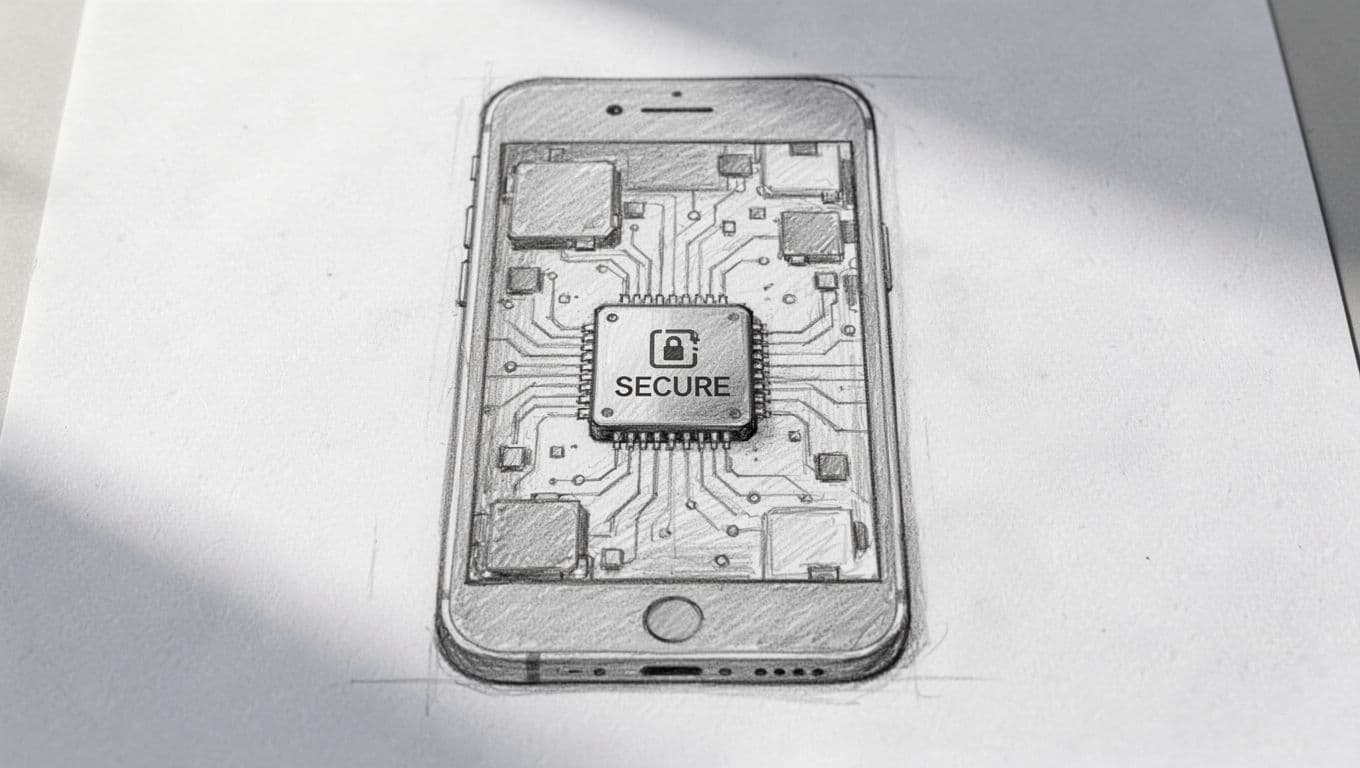
This physical separation means that even if a clever piece of malware managed to compromise your main processor, it still couldn’t “peer” into the cellular vault. The keys to your phone number and data plan are locked away in a tiny fortress. This design is standard across the iPhone eSIM compatibility list for all modern models, providing a hardware level of trust that software alone can’t match.
Shifting focus from hacking to leakage
If the hardware is so secure, where does the actual risk live? The danger rarely comes from a high-tech hacker breaking into your phone; it usually stems from the way your data travels through the air. Once your signal leaves the iPhone, it’s at the mercy of the local network infrastructure you’re using.
| Risk Type | Source | Prevention Method |
|---|---|---|
| Data Interception | Unsecured local towers | Use a reliable VPN |
| Roaming Bill Shock | Misconfigured settings | Disable data roaming on home line |
| Location Tracking | Network pings | Deny unnecessary app permissions |
Staying safe is more about managing your traffic than worrying about a compromised chip. To keep your browsing habits private on unfamiliar networks, you should always use an encrypted tunnel. You can Get your free esim now to practice setting up these defenses before your next big trip. The threat isn’t that someone will steal your eSIM; it’s that you might accidentally leave the digital front door open by using unencrypted connections on a foreign network.
4 Steps to Secure and Protect Your iPhone Data Abroad
Securing your device is about more than just a strong passcode. When you travel, your data acts like a digital trail that follows you across every border. Managing how your phone interacts with foreign networks ensures your private information doesn’t fall into the wrong hands or lead to a mountain of unexpected roaming fees. By taking control of a few specific toggles, you convert your iPhone from a vulnerable handheld into a vault that only opens when you say so.
Nix the Data Switching for Total Peace of Mind
Think of your cellular settings as the front door to your wallet. If you leave it unlocked, your primary carrier might sneak in and start charging you for expensive roaming data the moment your travel signal flickers. This happens because of a feature called Cellular Data Switching, which tries to keep you connected by jumping between available lines.
To stop this, head to Settings, then tap Cellular, and select Cellular Data. You will see a toggle for Allow Cellular Data Switching; turn it off immediately. Disabling this ensures your phone strictly uses your travel plan and never defaults back to your home SIM. It’s a simple move that prevents a weak signal in a Parisian cafe from turning into a three hundred dollar roaming bill.
Managing your lines properly is the first step toward a worry-free journey. You can actually Get your free esim now to start testing these settings and see exactly how the toggles work before you leave home. Locking this setting down keeps your primary line dormant and your budget intact throughout your entire trip.
Stop Background iCloud Syncing from Eating Your Allowance
Your iPhone loves to stay updated, but its appetite for data is ravenous. Photos and iCloud Drive are notorious data gluttons that wait for any connection to start uploading your high-resolution vacation snaps or massive work files. While this is great for backups, it can chew through a travel data plan in minutes if you aren’t careful.
Navigate to your iCloud settings and find the cellular sync options to put these apps on a diet. Turn off cellular data usage for Photos and iCloud Drive so they only perform their heavy lifting when you connect to a trusted Wi-Fi network. This protects your bandwidth for essential tasks like finding your hotel or translating a dinner menu.
Restricting these background tasks serves as a shield for both your battery life and your data cap. You don’t want to lose half your gigabytes because your phone decided to sync a 4K video of a street performer while you were walking to a museum. Keeping these uploads strictly on Wi-Fi ensures your travel data lasts until your flight home.
Clamp Down on Rogue App Permissions
Not every app on your phone deserves the right to use your international data. Many games, social media trackers, and news apps pull information in the background even when you aren’t using them. Auditing your cellular list is like performing a security sweep of your device to ensure only the most important tools have access.
Open the Cellular menu and scroll down to see the exhaustive list of every app on your phone. Flip the switch to off for anything that isn’t vital for travel, such as graphic-heavy games or automatic system update checkers. You want to prioritize tools like Maps, Translate, and travel vouchers over apps that just want to show you targeted ads or refresh a feed.
This manual audit is a high-impact way to troubleshooting iPhone eSIM profiles if you notice your data is disappearing faster than expected. By limiting access, you reduce the surface area for data leakage and keep your connection snappy. It turns your device into a lean, travel-focused machine that only talks to the internet when it has a legitimate reason.
Ghost the Trackers with iCloud Private Relay
If you want to feel like a digital secret agent, iCloud Private Relay is your best friend. This feature acts as a clever disguise, hiding your IP address and DNS requests from everyone, including foreign telecom providers and the websites you visit. It prevents third parties from building a profile of your browsing habits based on your location.
You can find this in your iCloud settings under the Private Relay menu. Turning it on ensures that your traffic is encrypted and sent through two separate internet relays. This makes it virtually impossible for someone on a public or foreign network to see who you are or exactly what you’re looking at online.
Using this tool provides an extra layer of anonymity that standard connections lack. It’s especially useful when you’re jumping between various roaming towers and local hotspots. Protecting your identity this way ensures that your digital footprint remains invisible while you’re busy exploring the physical world. For more ways to stay safe, check out the Apple support travel settings guide to see how deep these protections go.
Guarding Your Personal Info on Sketchy Public Networks
Public internet access is like a free buffet at a questionable roadside diner; it looks tempting when you’re hungry, but you might regret the choice later. While airports and cafes offer “guest” connections to keep you entertained, these networks are often playgrounds for digital pickpockets. Your personal data is far more valuable than a few minutes of free scrolling, and protecting it starts with understanding why those open signals are so risky.

Ditch the Free Airport Wi-Fi Trap
Free Wi-Fi at the gate is a magnet for convenience, yet it lacks the encryption hurdles that keep hackers away. These “open” networks often transmit your data in plain text, which means anyone nearby with a basic laptop can see exactly what you’re doing. A common trick is the “Evil Twin” attack, where a bad actor sets up a hotspot named “Free_Airport_Connect” to lure you in.
By choosing your cellular line over local Wi-Fi, you use a connection that is encrypted by design. Using your eSIM for iPhone means your data travels through a secure, private pipe rather than a shared public puddle. It is much safer to rely on your own digital card because it eliminates the middleman trying to intercept your login credentials. You can Get your free esim now to ensure you always have a private backup that bypasses these public security holes.
Strengthening Your DNS and App Security
Even if you think your connection is fine, your phone might be shouting your browsing history to the network via DNS requests. These requests act like a phonebook, telling the network which websites you want to visit before the site even loads. Using a secure DNS service or a VPN ensures these requests stay scrambled so the local network owner can’t track your digital footsteps.
Security also depends on where you get your information. Forums and random travel blogs often link to “third-party” profile downloads, but these can be Trojan horses for your data. Always use official apps from your provider or the App Store to manage your service. For instance, protecting personal data during eSIM signups is a lot easier when you stick to verified, reputable platforms instead of clicking suspicious links from strangers.
The Superior Privacy of Encrypted Mobile Data
An encrypted mobile profile is like having a private bodyguard for your data. While public Wi-Fi is a shared space where everyone can bump into your traffic, your cellular signal is a one-to-one conversation with the tower. Modern encryption standards used by carriers make it nearly impossible for a random person sitting in the terminal to “sniff” your packets out of the air.
Taking these precautions doesn’t just protect your passwords; it protects your peace of mind. According to the FTC guidance on public Wi-Fi safety, even encrypted sites can sometimes leak info on open networks. Staying on your own cellular plan removes that variable entirely. When you have a secure digital line active, the “free” internet at the airport is a risk you simply don’t need to take.
The Ultimate Travel Security Checklist for Your iPhone
Managing a digital life across multiple time zones feels like playing a high-stakes game of Tetris. One wrong move and your data is scattered across a foreign server. To keep your information as tidy as your carry-on, you need a quick-reference strategy that locks down every digital exit. Whether you are checking into a mountain lodge or navigating a busy city center, these quick wins ensure your device stays bulletproof while you enjoy the scenery.
Quick-Reference Security Toggles for Skimmers
If you are the type of traveler who only reads the highlights while waiting for boarding, this summary is for you. Balancing your privacy with your phone’s battery life is a delicate dance, but modern iOS features make it much easier. By hitting the most important switches now, you prevent a mountain of digital headaches once you land.
Setting up your mobile profile correctly is a great first step, and you can Get your free esim now to see these options in action. Beyond just data, you should look at how your system handles background tasks. For example, using iCloud Private Relay is a massive win for privacy because it masks your identity from local ISPs. If you are using a newer device, reviewing the iPhone 16 cellular settings for eSIM helps clarify how to juggle multiple lines without leaking location data.
- Software Updates: Install the latest iOS version before you leave the house to patch security holes.
- Stolen Device Protection: Turn this on in your Face ID & Passcode settings to stop thieves from changing your Apple ID.
- iCloud Photos: Disable cellular syncing to keep your holiday snaps from devouring your limited data plan.
- SIM PIN: Set a code on your cellular line so nobody can use your number if they grab your phone.
- Find My iPhone: Check that this is active so you can remotely wipe your data if the unthinkable happens.
Comparing High-Impact Privacy Settings
Not all settings are created equal when you are crossing borders. Some guard your wallet from roaming fees, while others shield your personal chats from prying eyes on a hotel network. Understanding the difference between a global block and a specific app restriction allows you to customize your safety level based on where you are staying.
| Feature | Primary Benefit | Why Use It Abroad? |
|---|---|---|
| iCloud Private Relay | Masks IP and DNS | Keeps your browsing private from local carriers. |
| Background App Refresh | Saves Data & Battery | Prevents rogue apps from “calling home” constantly. |
| Automatic Updates | Security Patching | Ensures you aren’t vulnerable to fresh exploits. |
Choosing the right tools for your trip makes a world of difference. For instance, knowing how to set up Airalo eSIM on iPhone helps you stay on a private line instead of relying on sketchy cafe hotspots. Always prioritize your eSIM data for banking or sensitive work emails since it is encrypted by default. Following NYT Wirecutter’s iPhone security tips also provides a solid foundation for keeping your Apple account locked down during your transit. Tightening these few screws turns your phone into a secure vault, leaving you free to find the best street food in town.
Conclusion
You’ve essentially turned your device into a pocket-sized vault by locking down these settings. A properly configured esim iphone setup is a digital fortress that keeps your private chats and banking details away from prying eyes. It outshines any sketchy public Wi-Fi because your data travels through an encrypted, private tunnel instead of a shared pool.
Take a quick peek at your data usage in the cellular menu every few days to keep tabs on any rogue apps. This habit identifies high-usage culprits before they drain your balance or slow down your connection. Staying observant ensures your focus remains on the breathtaking views rather than a stressful tech crisis.
The world is waiting for you to find its best hidden spots and local flavors. Go ahead and start your next journey with total confidence in your mobile security. Safe travels, fellow explorer, and don’t forget to take too many photos!
This post may contain affiliate links. If you make a purchase through these links, I may earn a small commission at no extra cost to you.