Picture this: you are wandering through a cobblestone alley in 2026, trying to load a high-resolution map or post a frantic “I’m lost” story, only to see the dreaded “No Data” alert. While travel is all about the thrill of the unknown, your connection shouldn’t be a mystery. Your esim iphone is the perfect partner for these adventures, but its performance depends entirely on the data bucket you choose.
Generally, 1GB is a safety net for a few days of basic navigation, while 10GB is a digital feast for social media lovers. We’ve mapped out exactly how long these common amounts will last in the real world so you don’t get stranded between Wi-Fi signals. Understanding how to estimate your international data usage is the first step toward a stress-free trip.
Why You Need to Plan Your Data Before Your Trip
Walking into a new country without a data plan is like trying to solve a puzzle in the dark. You might find a piece here or there, but you’ll mostly just bump into things. Mapping out your usage before you board the plane turns a potentially chaotic arrival into a smooth transition. It’s the difference between landing with a plan and landing with a prayer that the airport Wi-Fi actually works.
Staying Safe and Social on the Move
Getting lost in a foreign city is only romantic in movies. In the real world, you need working maps to find your hotel after a long flight. Having a reliable connection means you can check reviews for that “authentic” bistro before you accidentally order something questionable. It also keeps you tethered to reality, allowing you to share those mountain peak photos while the adrenaline is still pumping.
Safety is the biggest reason to prioritize your cellular connection over free hotspots. Public networks are often a playground for digital troublemakers who want to peek at your passwords. You can learn about the specific risks of using public Wi-Fi to see why an encrypted cellular signal is a much smarter choice. Your bank accounts will thank you for keeping your browsing private.

### Making the Modern Brain Move
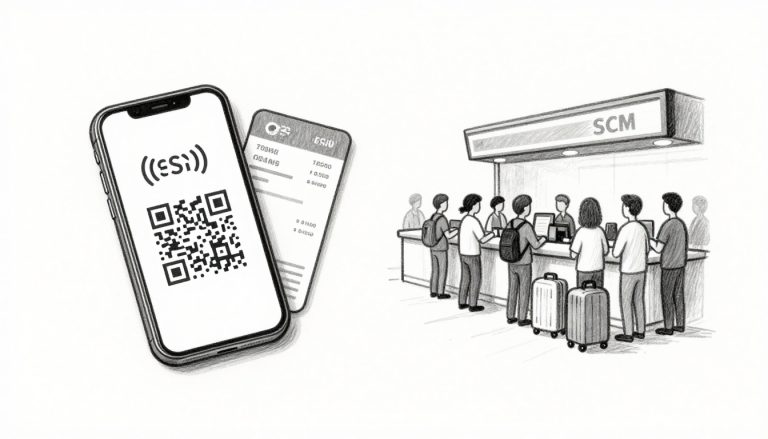
Switching to an eSIM iPhone setup is the ultimate travel hack for the clever traveler. Traditional roaming fees are a recipe for “bill shock,” that heart-sinking moment you see a three-digit charge for checking a few emails. Hunting for a plastic SIM card at a kiosk is equally exhausting after a ten-hour flight. Why wait in line for a tiny piece of plastic when you can download your connection in seconds?
Using a digital plan also eliminates technical headaches like high latency, where your phone takes forever to respond to a simple request. When you have a local profile on your device, your data doesn’t have to travel halfway around the world and back just to load a webpage. It’s fast, it’s efficient, and it keeps your physical SIM slot free for your home number.
Planning your data ahead of time is simply the most logical way to travel today.
- You avoid the stress of finding connectivity at the terminal.
- You protect your personal information from unsecured public networks.
- You save a significant amount of money compared to standard carrier roaming.
To get started on your own stress-free journey, you can Get your free esim now and see how easy it is to stay connected across borders.
Breaking Down Data Usage: 1GB, 5GB, and 10GB
Not all smartphone apps are created equal; some are secret “data vampires.” These hungry background processes can drain your digital lifeblood faster than a hungry mosquito at a summer camp. Think of your data as a bucket of water. Every time you refresh a feed or open a map, you are scooping a cup out of that bucket.
Choosing the right size for this bucket is the most important decision for your trip. If you pick a tiny pail for a long hike, you’ll be thirsty before noon. On the other hand, hauling a massive tank for a ten minute walk is just a waste of energy. Whether you are choosing the right data allowance for travel or just trying to survive a long layover, knowing your numbers helps you avoid the dreaded “No Data” void.

### What Can 1GB of Data Do?
A single gigabyte is the digital equivalent of a light snack. It’s the minimalist’s choice, perfect for a weekend mountain hike or a quick city break where you’re mostly looking at the scenery. You can comfortably handle about 12 hours of web browsing or send thousands of text-only emails. Just don’t get too ambitious with your entertainment.
The “one movie” rule is your most important safeguard here. A single high-definition film will kill your entire 1GB allowance in about 45 minutes, leaving you with a very expensive paperweight. However, for practical tasks, it’s surprisingly sturdy. You can squeeze about 50 hours of Google Maps navigation out of it, which is plenty for finding that hidden gelato shop.
Managing this small amount is a breeze on your eSIM iPhone. You can peek at your settings to see exactly which apps are acting like gluttons. If you see something unnecessary eating your bits and bytes, just toggle it off. It’s about being intentional so you can Get your free esim now without worrying about running dry during a short excursion.
What Can 5GB of Data Do?
This is the sweet spot for the typical traveler who wants to live their best life. With 5GB, you aren’t just surviving; you’re thriving. It’s enough to post those sunset Reels every evening and spend an hour daily scrolling through social media. You also get roughly 10 hours of video calls, so you can actually show your mom the Eiffel Tower instead of just describing it.
A week-long vacation feels much more relaxed with this plan in your pocket. You can share high-res photos without a second thought. Because you have a healthy buffer, you won’t feel the urge to hunt for suspicious “Free Wi-Fi” signs in every cafe. It provides enough freedom to treat your phone like a tool rather than a ticking time bomb.
For many users, 5GB hits that goldilocks zone of being “just right” for the price.
- You can stream about 40 hours of music while wandering through local markets.
- Browsing the web for 50 to 75 hours becomes a realistic expectation for your mobile data.
- You have plenty of room for about 5,000 emails, even if they have some small attachments.
What Can 10GB of Data Do?
If you’re a digital nomad or a long-term camper, 10GB is your best friend. This is a digital feast that supports heavy gaming and about 12 to 15 hours of YouTube streaming. It’s built for people who don’t just use their phones for “emergencies” but actually live through them while on the road.
Remote workers often need more than just a scrolling device. They need a hub. Your eSIM iPhone can easily tether to a laptop, allowing you to stay on top of Slack and send out important emails from a park bench or a beachfront tent. This amount of data gives you the confidence to work from anywhere without constantly checking the usage meter.
While it feels like a lot, remember that 4K video is still the enemy. Even 10GB can vanish if you try to binge-watch an entire series in ultra-high resolution. Use it for the essentials of a modern lifestyle: staying productive, staying entertained, and keeping your hotspot active for your other devices. It’s the ultimate insurance policy for anyone who considers a stable internet connection a basic human right.
How to Manage Data Usage on Your eSIM iPhone
Think of your iPhone as a very eager personal assistant who wants to do everything at once. While that enthusiasm is great at home, it can be a bit of a disaster for your data plan when you are traveling. Left to its own devices, your phone will try to update every app, sync every photo, and “chat” with every server it can find. Luckily, you can put your phone on a strict digital diet with just a few taps.
By taking charge of your settings, you transform your device from a data-hungry monster into a lean, mean, travel machine. These built-in tools are specifically designed to help you stretch every megabyte. Whether you are on a tight 1GB budget or a roomier 10GB plan, these small tweaks ensure you stay connected until the very end of your trip.
Enabling Low Data Mode on iOS
If your iPhone were a person, Low Data Mode would be the equivalent of giving it a cozy blanket and telling it to take a nap. This setting tells your phone to stop being so hyperactive. It pauses automatic updates, halts background tasks, and even stops those giant photo backups from running while you are trying to find your hotel. It is the ultimate “chill mode” for your device.
Turning this on is incredibly simple and saves you from those “where did my data go?” moments.
- Open your Settings app and tap on Cellular.
- Tap on Cellular Data Options.
- Hit Data Mode and select Low Data Mode.
Once active, your iPhone stops doing the heavy lifting behind the scenes. It won’t download that 2GB game update while you’re at the beach; instead, it waits until you manually ask for it. Apple provides a great overview on how to use Low Data Mode on your iPhone to keep things efficient. It is a simple way to make sure your eSIM lasts through your entire vacation without any surprise outages.

### Disabling Background App Refresh
Did you know your apps are constantly talking behind your back? Even when you aren’t using them, apps like Instagram, Facebook, and Mail are constantly reaching out to the internet to check for new likes or messages. This “background refresh” is a major culprit for random data bleed on your iPhone that can drain your eSIM in record time.
Shutting down this chatter is a total “two-for-one” win for travelers. Not only does it protect your data, but it also saves a massive amount of battery life. If you are camping or hiking all day without a charger, this is a lifesaver. You can turn it off entirely or just for specific apps by going to Settings > General > Background App Refresh. By telling those apps to stay quiet until you actually open them, you stay in total control of your connectivity.
Downloading Offline Resources Before Your Trip
The smartest way to use zero data is to not use any at all. Remote areas often have patchy service, so relying on a live connection for every single turn on a map is a risky move. Before you even leave your house (or your hotel’s Wi-Fi), you should be downloading your essentials. This strategy lets you enjoy your trip without constantly glancing at your data meter.
Preparation is the secret weapon of the savvy nomad.
- Open Google Maps and download the entire city or region you are visiting so you can navigate offline.
- Download your favorite Spotify playlists or podcasts so you have a soundtrack for those long train rides.
- Grab a few episodes of your favorite show on Netflix or YouTube so you aren’t stuck with boring local TV.
When you do this over a home connection, you save your eSIM for high-value tasks like calling an Uber or checking flight updates. It turns your phone into a local vault of information that works perfectly even in the deepest forest or the most remote mountain pass. Moving your entertainment and mapping to “offline mode” is the most effective way to Get your free esim now and make that data stretch for weeks instead of days. Be sure to check your device settings to reduce data usage periodically to make sure no new apps have decided to start feasting on your plan.
Why eSIM iPhone Is Perfect for Travelers and Campers
Switching to an esim iphone setup is like upgrading from a bulky paper map to a high-speed GPS. You no longer have to hunt for a paperclip or a tiny earring to poke at your phone’s SIM tray. That little plastic card is a relic of the past, and losing it in a grassy campsite or a busy airport is a nightmare. With digital connectivity, you simply tap your screen and you are ready to explore.
Modern travel is about moving fast and staying flexible. Having an embedded chip means your connection is built directly into your hardware. You can switch between different data buckets or providers without ever touching a pieces of plastic. It is a smarter way to manage your mobile life while you are away from home.
The Magic of Dual SIM Flexibility
One of the best tricks your esim iphone can perform is balancing two identities at once. You can keep your home physical SIM active to receive important texts or calls from family while using your digital plan for all your internet needs. This dual setup ensures you never miss a two-factor authentication code for your bank.
It also solves the problem of keeping your social accounts linked to your original number. Apps like WhatsApp or iMessage stay tied to your primary contact info, so the transition to a new country is invisible to your friends. Because you aren’t swapping cards, you don’t risk leaving your expensive home plan sitting on a hotel nightstand. You can even buy prepaid data eSIM online before you land to ensure you have a signal the moment your plane touches the runway.

### Safety and Security in the Wild
Security is a major concern when you are navigating unfamiliar streets or remote trails. If someone swipes your phone, their first move is usually to toss the SIM card to kill the tracking signal. However, since an esim iphone has the chip soldered inside, a thief cannot simply “remove” your connection. This gives you a much better chance of using Apple’s Find My service to track your device.
Campers and hikers gain an extra layer of safety through network variety. If you are in a valley where your main carrier has no bars, you can often download a secondary plan from a competitor with better local coverage. This digital backup can be a lifesaver when you need to check a weather report or call for help.
- No more fumbling with tiny tools in the wind or rain.
- Your identity is more secure because the SIM is impossible to steal physically.
- You can Get your free esim now and add data instantly if you run low during a long hike.
Skipping the Airport Kiosk Chaos
Landing in a new country often involves a long wait at a dusty kiosk where prices are tripled for tourists. These shops often ask for your passport, which is a big privacy risk you should avoid. By choosing a digital plan, you skip the lines and the “tourist tax” entirely.
You can manage everything through your phone settings or a trusted app. This lets you compare prices and data limits from the comfort of your couch before you even pack your bags. Knowing you have improved security through eSIM technology means one less thing to worry about. It leaves you with more time to focus on your adventure and less time worrying about your signal.
Frequently Asked Questions
Navigating the world of mobile data can feel like trying to read a menu in a language you don’t speak. You probably have a few lingering worries about how your data will behave once you leave the safety of your home Wi-Fi. We’ve rounded up the most common head-scratchers to keep your trip as smooth as a fresh jar of peanut butter.

### Is 10GB enough for a 1-week camping trip?
Yes, 10GB is more than enough for a week in the woods, unless you plan on streaming a 4K movie marathon every single night under the stars. For most campers, this amount is actually generous. You can check the weather, look up local hiking trails, and post a few sunset photos every evening and still have plenty of room left over.
Moderate users will find that 10GB covers all the essentials with room for some relaxing music or a few podcasts during the quiet hours. If you are a heavy user who needs to participate in video work calls or watch high-definition videos when the mosquitoes get too thick, you might get close to the limit. Most people find that a step-by-step eSIM travel guide helps them manage these larger buckets effectively.
Does using GPS on iPhone consume much data?
The GPS inside your iPhone is actually a radio signal that talks to satellites, which doesn’t cost a single penny or use any data. However, the pretty maps, street names, and restaurant reviews you see on your screen have to be downloaded from the internet. If you haven’t prepared, your phone will frantically download map tiles as you move, which can eat through a small data plan quickly.
The ultimate pro-move for hikers and travelers is to download offline maps before leaving your base camp or hotel. This way, your phone uses the free satellite signal to show your “blue dot” on a map that is already stored on your device. You can see how Google Maps uses data and why saving your maps ahead of time keeps your connection for more important things, like calling for a ride.
Can I use my main number and my eSIM iPhone at the same time?
You don’t have to choose between your home life and your travel adventures. A modern iPhone allows for a Dual SIM setup, meaning your physical SIM and your eSIM can live together in harmony. This is perfect for the traveler who wants to browse the web using cheap local data while still receiving texts from their mom back home.
You can simply tell your phone to use the new plan specifically for “Cellular Data” while keeping your primary line active for calls and messages. This ensures you never miss an important work notification or a bank verification code while you are exploring the Rockies or the streets of Italy. If you want to experience this freedom, you can find the right travel eSIM for your next destination and stay connected to everyone who matters.
Conclusion
Choosing the right amount of data is about matching your digital appetite with your travel style. The Minimalist can thrive on 1GB by sticking to the basics like GPS, text-only emails, and quick web searches. It’s a great safety net for short trips where you spend more time looking at landmarks than looking at a screen.
The Vacationer finds a sweet spot with 5GB of data. This size allows for daily social media updates, plenty of music streaming, and even a few video calls to share the view. If you want more freedom, the Pro level of 10GB supports heavy gaming and regular video streaming without the constant fear of a midday cutoff.
You can travel the globe with confidence when you know your phone won’t leave you stranded once you leave the hotel. Staying connected is cheaper and easier than ever with an eSIM iPhone. You can best prepaid global eSIM plans to see how much you could save on your next adventure.
Don’t let the fear of a high bill or a dead signal stop you from exploring. You can Get your free esim now and find the perfect data bucket for your journey today.
This post may contain affiliate links. If you make a purchase through these links, I may earn a small commission at no extra cost to you.